2026 Best Flat Heat Pipe Innovations and Their Applications?
In recent years, the demand for efficient thermal management solutions has propelled innovations in the Flat Heat Pipe sector. Experts like Dr. Emily Chen, a renowned figure in thermal engineering, emphasize, "Flat Heat Pipes are at the forefront of enhancing heat dissipation in compact designs." As we approach 2026, this technology promises to revolutionize various industries, from electronics to renewable energy.
Flat Heat Pipes offer unique advantages, including their lightweight design and high thermal conductivity. They can efficiently transfer heat across surfaces and contribute to energy-saving applications. Engineers are experimenting with different materials to optimize performance, yet challenges in scalability remain. Not all designs meet the rigorous demands of modern applications, calling for continuous improvement.
The exploration of Flat Heat Pipe innovations is both exciting and complex. As industries seek solutions that support sustainability, the focus on practical applications is essential. Companies must balance efficiency with economic viability. This ongoing dialogue invites reflection on the limitations and potential of this technology. It’s a journey of discovery, pushing boundaries while addressing real-world needs.

Overview of Flat Heat Pipe Technology and Its Importance
Flat heat pipes represent a significant advancement in thermal management technology. Their unique structure allows for efficient heat transfer, making them essential in various applications. This technology maximizes heat dissipation while minimizing size and weight, which is crucial in industries like electronics and renewable energy. As devices become smaller and more powerful, the need for effective cooling solutions grows.
One important aspect of flat heat pipe technology is its versatility. It can be integrated into different systems, including LED lighting and high-performance computing. These applications rely on efficient heat dissipation for optimal performance. The ability to design flat heat pipes in various shapes and sizes enhances their usability across diverse sectors. However, challenges remain in achieving perfect thermal conductivity for all designs.
Tip: When considering flat heat pipes, evaluate your specific thermal management needs. Understanding the application context helps in selecting the right pipe design.
Additionally, research is ongoing to improve flat heat pipe efficiency. New materials and techniques may enhance performance but can also complicate manufacturing processes. It's essential to stay informed about these developments. This awareness can lead to better decision-making when investing in thermal solutions.
Key Innovations in Flat Heat Pipe Design for 2026
The flat heat pipe design is evolving rapidly in 2026, driven by growing demands for efficient thermal management. These innovations are crucial across industries, particularly in electronics and renewable energy. According to a recent market analysis by ResearchAndMarkets, the global heat pipe market is projected to reach $3 billion by 2026. This statistic highlights the increasing importance of heat pipe technology in various applications.
Key innovations include enhanced materials that boost thermal conductivity while reducing weight. For example, new wicking structures allow for better fluid transfer in tighter spaces. This is essential for high-performance electronic devices, where overheating can lead to failure. Additionally, the development of eco-friendly fluids is gaining traction. It reflects a shift towards sustainable practices in product design.
Nonetheless, challenges remain. While flat heat pipes have improved, their production can be complex and costly. Inconsistent performance under extreme conditions is another concern. Industry experts stress the need for ongoing research to refine these technologies. Effectively addressing these issues will be vital for future advancements in flat heat pipe applications.
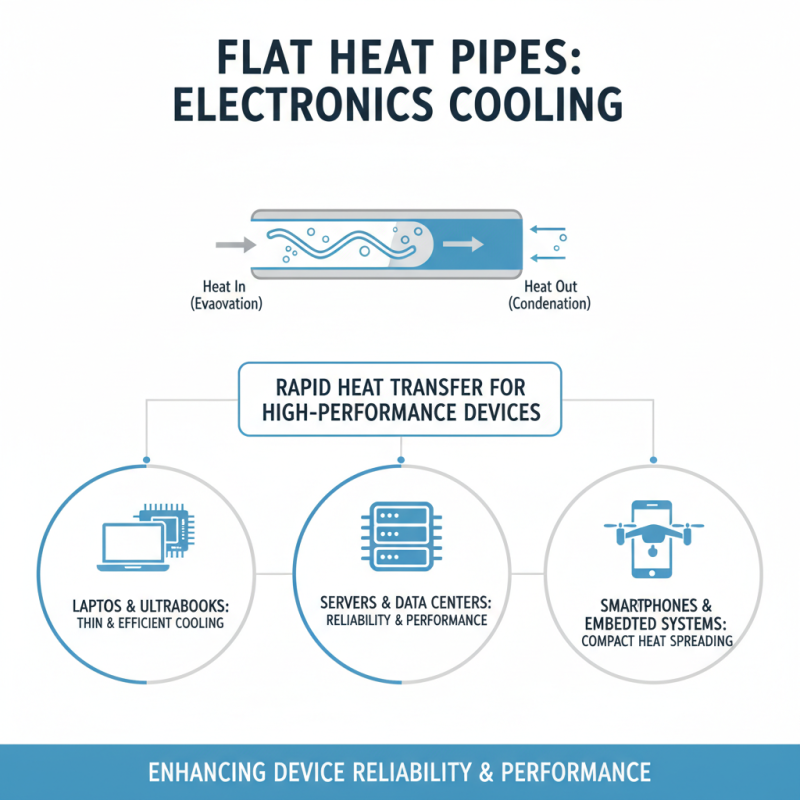
Applications of Flat Heat Pipes in Electronics Cooling Systems
Flat heat pipes are becoming essential in electronics cooling systems. Their unique design allows rapid heat transfer, making them ideal for high-performance devices. These pipes utilize the phase change of liquids to efficiently conduct heat away from critical components, thus enhancing reliability and performance.
In many electronics, overheating can lead to failures. The use of flat heat pipes reduces temperatures more effectively than traditional methods. They fit seamlessly into compact spaces. This is crucial for modern devices that prioritize lightweight and slim profiles. However, not all designs are perfect. Improper alignment or inadequate material selection can lead to inefficiencies.
Tips: When designing electronics, consider the orientation of heat pipes. Their effectiveness can vary based on vertical or horizontal placement. Regular testing of thermal performance ensures optimal operation. Monitoring the working fluid inside the pipes can also prevent long-term issues.
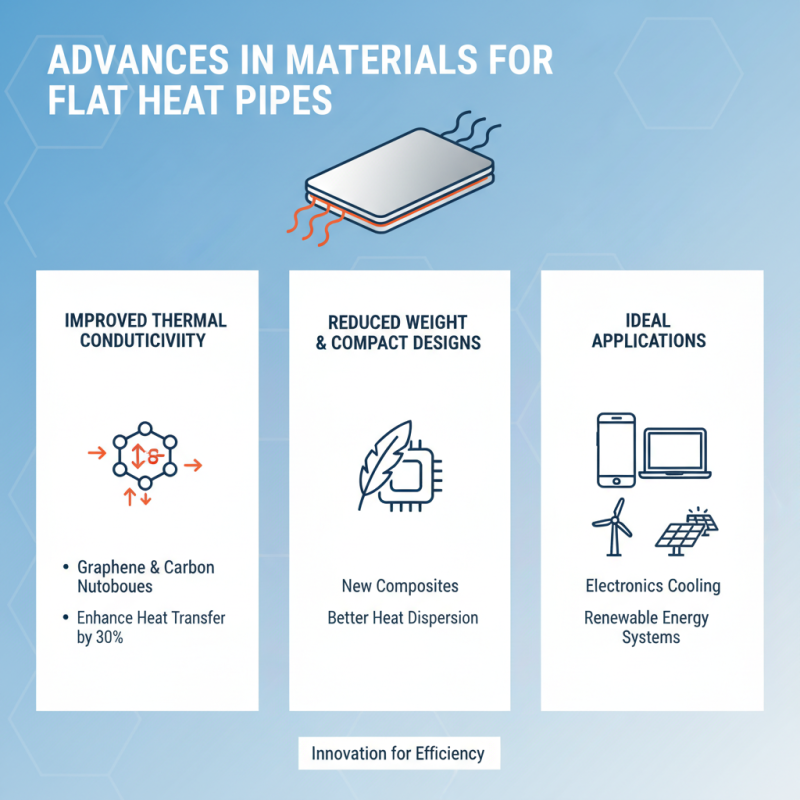
Advancements in Materials Used for Flat Heat Pipes
The development of materials for flat heat pipes has seen remarkable advancements in recent years. New composites are being designed to improve thermal conductivity while reducing weight. For instance, recent studies indicate that materials like graphene and carbon nanotubes can enhance heat transfer efficiency by up to 30%. These materials allow for better heat dispersion in compact designs, making them ideal for various applications in electronics and renewable energy.
Moreover, the integration of phase change materials (PCMs) into flat heat pipes is gaining traction. PCMs can absorb and release heat effectively, making them suitable for applications in energy storage systems. A report from the International Thermal Management Society highlights that integrating PCMs can increase thermal efficiency by nearly 25%. However, challenges remain in optimizing the weight and cost of these materials. Further research is needed to overcome these hurdles and ensure widespread adoption.
While progress is promising, questions linger about the long-term reliability of these new materials. For instance, the impact of thermal cycling on their durability is not fully understood. Industry experts emphasize the need for more testing to quantify potential degradation over time. Continued collaboration between material scientists and engineers is essential to address these gaps effectively.
Future Trends and Challenges in Flat Heat Pipe Development
The development of flat heat pipes is witnessing significant trends and challenges as we move towards 2026. These innovations promise enhanced thermal management in various applications. Yet, manufacturers face hurdles such as material durability and manufacturing capabilities. Future designs must focus on the integration of advanced materials. This could improve performance while reducing weight.
One pressing issue is the scalability of production processes. Technology is evolving, but adapting it for large-scale manufacturing remains complex. Understanding the thermal dynamics and fluid mechanics involved is crucial. Engineers must rethink traditional designs to enhance efficiency. There’s a real need for more research into eco-friendly materials that do not compromise performance.
Moreover, the market demands are shifting. Industries are seeking solutions that not only perform well but also align with sustainable practices. Innovators must navigate these expectations while ensuring reliability. Collaboration across fields can lead to breakthroughs, but communication challenges persist. The future of flat heat pipes will depend on addressing these multifaceted issues while maintaining a focus on performance and sustainability.
2026 Innovations in Flat Heat Pipes




 Mr. Perry Wu International Sales Director