Why Choose Flexible Heat Pipes for Efficient Thermal Management?
In modern thermal management, the role of Flexible Heat Pipes is becoming crucial. These innovative components provide efficient heat transfer, adapting to various environments. Their unique design allows for integration into compact and intricate systems. Engineers increasingly choose them for their versatility.
Flexible Heat Pipes excel in applications with limited space. For example, they fit perfectly in tight electronic devices. Their bending capabilities ensure optimal performance without sacrificing efficiency. However, the complexity in manufacturing these pipes can lead to inconsistencies, prompting careful evaluation.
While many praise Flexible Heat Pipes, some challenges remain. For instance, their effectiveness may vary based on specific conditions. Users should consider factors like temperature range and material compatibility. Despite these concerns, these heat pipes remain a formidable solution. Their potential benefits may outweigh drawbacks with proper implementation and analysis.
Understanding the Basics of Flexible Heat Pipes and Their Functionality
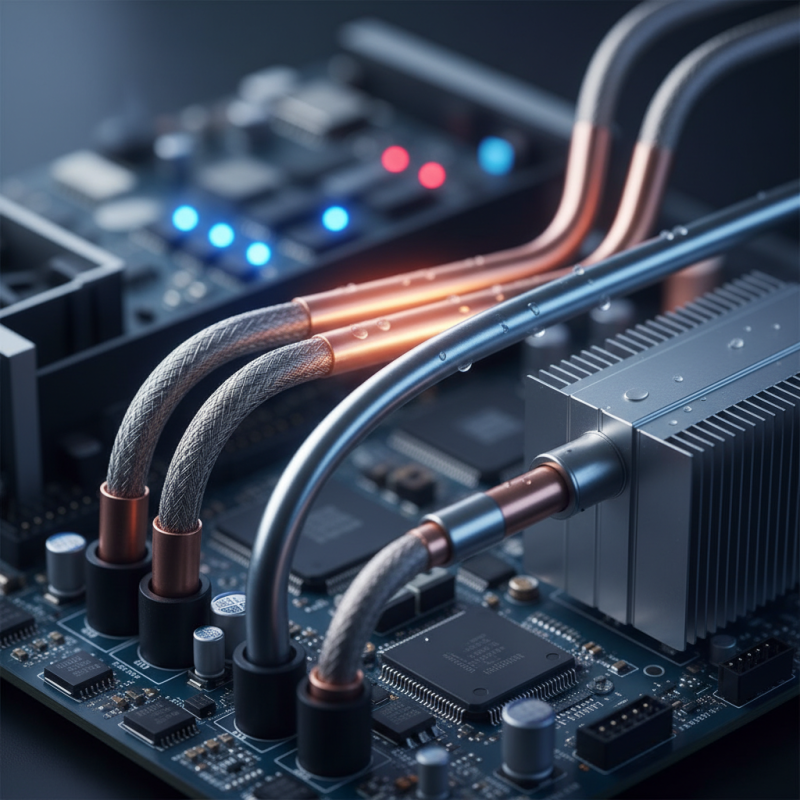
Flexible heat pipes are becoming increasingly popular in thermal management applications. These devices help to transfer heat efficiently in various environments. Their flexibility allows for integration into tight spaces and complex designs. This is particularly useful in industries such as electronics, aerospace, and automotive, where space is at a premium.
Most heat pipes operate on the principle of phase change. Liquid inside the pipe absorbs heat, vaporizes, and moves to cooler areas. This process can lead to a heat transfer efficiency of up to 95%. A recent industry report from the Thermal Management Association highlighted that flexible heat pipes reduce thermal resistance by an average of 25% when compared to traditional solid heat sinks. This data shows their potential for improving system performance.
However, there are challenges with flexible heat pipes. They can be more expensive to manufacture than rigid counterparts. Durability may also be a concern, as bending could lead to fatigue over time. Engineers must carefully consider placement and material choices to mitigate these issues. Yet, the advantages they offer in dynamic environments often outweigh the potential drawbacks. Understanding these fundamentals is key to leveraging their capabilities effectively.
Advantages of Using Flexible Heat Pipes in Thermal Management Systems
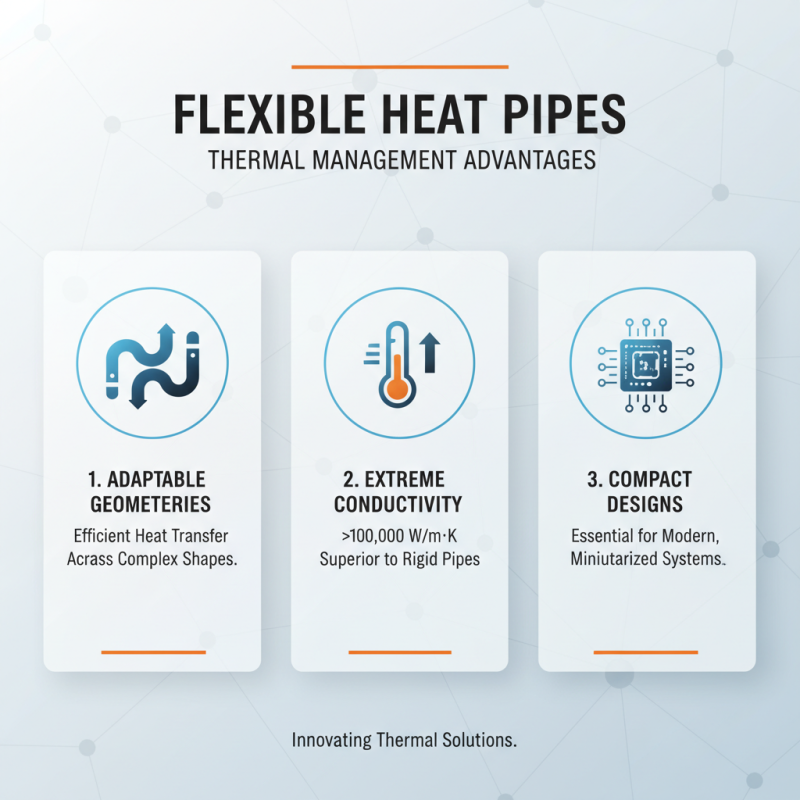
Flexible heat pipes offer several advantages in thermal management systems. Their ability to efficiently transfer heat across varied geometries makes them ideal for modern applications. According to a recent industry report, flexible heat pipes can achieve thermal conductivities exceeding 100,000 W/m·K under optimal conditions. This performance surpasses that of traditional rigid heat pipes, making them essential in compact designs.
These heat pipes can adapt to complex layouts, allowing them to fit snugly in limited spaces. In medical devices and electronics, where size constraints are common, this adaptability enhances overall system performance. Flexibility also enables easier integration during manufacturing. However, the initial costs can be higher than standard solutions. Evaluating the long-term benefits could inform budget decisions.
Moreover, flexible heat pipes reduce the risk of thermal failure. A study from a leading thermal management firm indicated that these pipes reduced failure rates by up to 30% in rigorous conditions. This reliability is critical for sensitive applications. Still, some designs may suffer from limitations in extreme temperatures. Continuous development in materials may address these concerns, pushing the technology further into new sectors.
Applications of Flexible Heat Pipes in Various Industries
Flexible heat pipes are gaining traction across various industries due to their efficient thermal management capabilities. These devices adapt to different shapes and sizes, making them ideal for applications in aerospace, electronics, and automotive sectors. In aerospace, flexible heat pipes help manage the temperature of sensitive components, ensuring safety and performance. For electronics, they are used to dissipate heat from high-performance processors, improving reliability.
In the automotive industry, flexible heat pipes play a crucial role in battery cooling systems. They help maintain optimal temperatures in electric vehicles, enhancing battery life and performance. This technology is also finding applications in renewable energy systems, such as solar panels, where they assist in heat distribution.
Tip: When selecting flexible heat pipes, consider the operating temperature range and the pipe's bending radius. Smaller bending radii may affect thermal performance.
Another essential aspect is the installation process. Incorrect installation can impair functionality. Always follow best practices to ensure optimal performance.
Tip: Regular maintenance checks can prolong the life of heat pipes. Look for signs of wear or damage that may affect thermal management.
Flexible heat pipes offer versatility but require careful consideration in design and implementation. Their potential for efficiency is immense, but it's crucial to understand their limitations.
Applications of Flexible Heat Pipes in Various Industries
Comparative Analysis: Flexible Heat Pipes vs. Traditional Thermal Solutions
Flexible heat pipes are increasingly popular for thermal management. They offer distinct advantages over traditional solutions. These pipes can adapt to different shapes, making them suitable for a variety of applications. A recent industry report indicates that flexible heat pipes can conduct heat up to 50% more efficiently than standard metal heat sinks. This is important in environments where space is at a premium.
In comparison, traditional thermal solutions often struggle with thermal conductivity limitations. Rigid designs can lead to hotspots, causing performance issues. Flexible heat pipes, on the other hand, can conform to surfaces and minimize thermal resistance. Their versatility allows for more effective heat distribution, a critical factor in high-performance systems.
Tip 1: Consider the layout of your thermal management system. Flexible heat pipes can provide unique solutions in tight spaces. They can easily be integrated into intricate designs.
Tip 2: When evaluating heat management options, emphasize efficiency and adaptability. Many industries seek innovative technologies to enhance their performance and sustainability. Rethink whether your current system meets these needs effectively.
Why Choose Flexible Heat Pipes for Efficient Thermal Management? - Comparative Analysis: Flexible Heat Pipes vs. Traditional Thermal Solutions
| Feature |
Flexible Heat Pipes |
Traditional Thermal Solutions |
| Weight |
Lightweight and easy to integrate |
Typically heavier and bulkier |
| Flexibility |
Highly flexible, can bend to fit tight spaces |
Rigid and fixed shape |
| Thermal Conductivity |
High thermal conductivity for rapid heat transfer |
Variable thermal conductivity, often lower |
| Installation |
Easier installation due to flexibility |
More complex installation process |
| Cost |
Competitive pricing for custom solutions |
Often higher due to material and manufacturing |
| Design Versatility |
Highly customizable for various applications |
Limited design adjustments |
Key Considerations When Implementing Flexible Heat Pipes in Designs
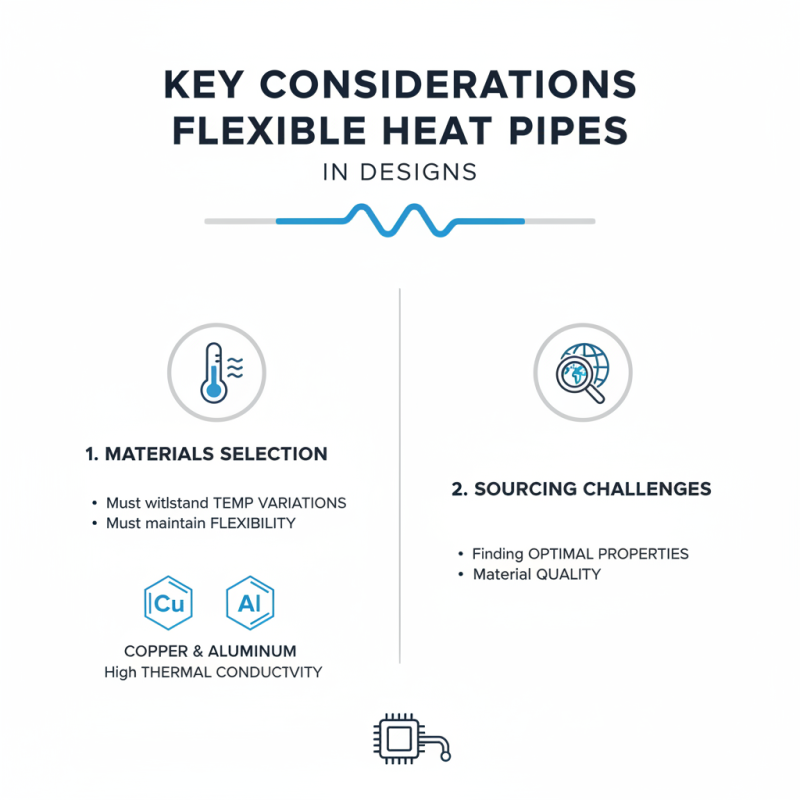
When considering the implementation of flexible heat pipes, several key factors come into play. First, the choice of materials is crucial. These pipes must withstand temperature variations while maintaining flexibility. Copper and aluminum are common choices due to their thermal conductivity. However, sourcing these materials with optimal properties can be challenging.
Another aspect to pay attention to is the design integration. Flexible heat pipes need to fit within varying spaces and shapes. This requirement might lead to complexities in the design process. Engineers often have to run simulations and tests to find a suitable configuration, which can be time-consuming.
Lastly, performance testing is essential. While flexible heat pipes can offer excellent thermal management, their efficiency can vary widely. Proper testing frameworks must be established to validate their performance under different conditions. It’s not uncommon to encounter unexpected results. Such iterations may highlight areas for improvement, ensuring the final product meets thermal requirements.







 Mr. Perry Wu International Sales Director