Understanding Heat Sink Thermal Resistance for 2026 Top Designs?
Heat Sink Thermal Resistance plays a crucial role in the design and efficiency of electronic components. As technology advances, we face the challenge of managing heat dissipation effectively. Poor thermal management can lead to device failure and reduced performance. Understanding this concept is essential for engineers and designers.
The growing demand for high-performance electronics pushes the limits of thermal resistance. For 2026 designs, the significance of minimizing heat sink thermal resistance cannot be overstated. Efficient heat sinks help maintain optimal operating temperatures and prolong product lifespan. However, achieving this requires a careful balance between materials, geometry, and airflow.
While many designs focus solely on reducing thermal resistance, there is a risk of overlooking other important factors. The integration of advanced materials and innovative designs is necessary. Yet, not all methods yield immediate improvements. Continuous testing and feedback are vital for refining designs. Delving deeply into heat sink thermal resistance can reveal hidden potential and pitfalls in modern applications.

Understanding Thermal Resistance: Definition and Importance
Thermal resistance is a crucial factor in heat sink design, impacting overall efficiency. It defines how effectively a heat sink can dissipate heat from the component it is cooling. A lower thermal resistance value indicates better heat dissipation. This directly affects a device's performance and longevity. For high-performance components, thermal resistance can vary significantly due to design choices.
According to industry reports, the optimal thermal resistance for cutting-edge heat sink designs in 2026 should not exceed 0.5°C/W. This figure is crucial for maintaining component reliability under load. Components like CPUs and GPUs function best with efficient heat management, as excessive heat can reduce performance and increase failure likelihood. Even small variations in thermal resistance can lead to significant temperature changes.
While advancements in materials and design continue, some challenges remain. Many designs struggle with balancing size and thermal efficiency. Additionally, the manufacturing process can introduce inconsistencies that affect thermal performance. Designers must constantly assess these factors to optimize designs. Understanding thermal resistance is essential for achieving a balance between functionality and durability in modern electronics.
Understanding Heat Sink Thermal Resistance for 2026 Top Designs
This chart illustrates the thermal resistance of various materials commonly used in heat sink designs for 2026. Lower thermal resistance values indicate better heat dissipation capabilities, which is essential for maintaining optimal performance in electronic devices.
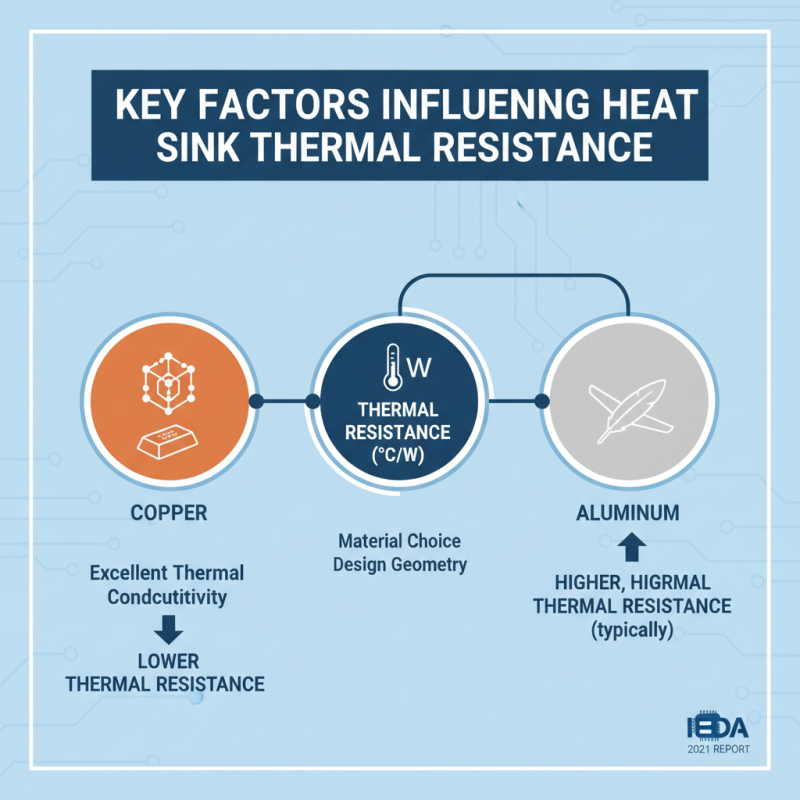
Key Factors Influencing Heat Sink Thermal Resistance
When analyzing the thermal resistance of heat sinks, several key factors come into play. Thermal resistance, measured in degrees Celsius per watt, is a critical parameter. A 2021 report by the International Electronic Devices Association highlighted that heat sink efficiency can significantly vary depending on material choices. Copper, with its excellent thermal conductivity, can reduce thermal resistance compared to aluminum. Yet, aluminum’s lightweight properties make it a popular choice, especially in compact designs.
Surface area also greatly affects thermal resistance. A larger surface area typically enhances heat dissipation. A study conducted by the Thermal Management Consortium indicated that increasing a heat sink’s surface area by 20% can lower thermal resistance by over 15%. However, this might not always be practical in design. Sometimes, engineers face the challenge of balancing size constraints with performance guarantees.
Additionally, airflow plays a pivotal role. A well-designed system will optimize airflow around the heat sink. Research has shown that forced convection scenarios can enhance heat transfer. Nevertheless, excessive airflow might introduce noise issues, warranting careful design decisions. The nuanced interplay of these factors sets the stage for innovation in heat sink design. Each consideration requires thorough analysis to avoid potential pitfalls in thermal management.
Top Designs for 2026: Innovations in Heat Sink Technology
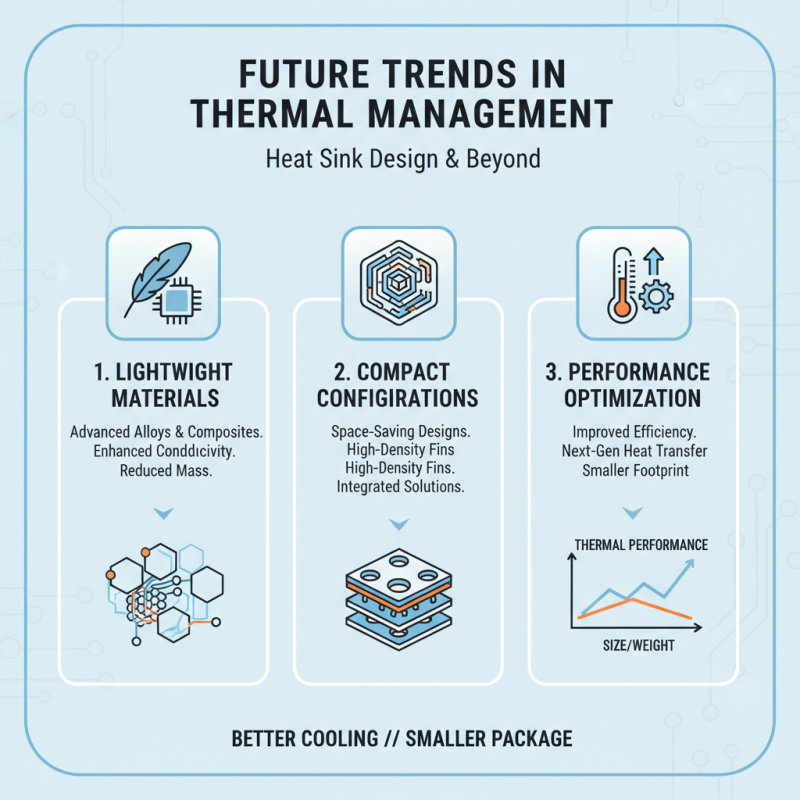
As we look towards 2026, innovations in heat sink technology are reshaping the landscape of thermal management. Factors such as material selection and design efficiency play crucial roles. Recent research indicates that advanced materials can reduce thermal resistance by up to 30%. This is significant for high-performance electronics that require effective cooling solutions.
One intriguing development is the rise of microporous structures. These designs enhance surface area, enabling better heat dissipation. According to a 2023 industry report, heat sinks with microporous technology show a 40% improvement in thermal conductivity compared to traditional options. However, this complexity in design poses challenges in manufacturing consistency and cost.
Another trend is the integration of smart technologies. Heat sinks equipped with sensors can monitor temperature in real-time. This innovation ensures optimal performance while preventing overheating. Nonetheless, these systems depend on reliable software to avoid errors in readings or malfunctions. As the industry evolves, continuous reflection on potential setbacks in reliability and production will be essential. In 2026, the focus will be on balancing innovation with practical implementation in thermal management solutions.
Understanding Heat Sink Thermal Resistance for 2026 Top Designs
| Design Type |
Material |
Thermal Resistance (°C/W) |
Weight (g) |
Dimensions (mm) |
| Extruded |
Aluminum |
0.5 |
150 |
100 x 50 x 10 |
| Stamped |
Copper |
0.3 |
100 |
80 x 40 x 5 |
| Bonded |
Graphite |
0.4 |
70 |
60 x 30 x 3 |
| Active Cooling |
Aluminum |
0.2 |
200 |
150 x 75 x 20 |
| Heat Spreader |
Copper |
0.25 |
90 |
90 x 45 x 4 |
Performance Evaluation: Measuring Thermal Resistance Effectiveness
Thermal resistance is a critical factor in heat sink design. It determines how efficiently a heat sink can transfer heat away from a component. Understanding these values is essential for optimizing performance. Research indicates that effective thermal resistance can greatly enhance system reliability. A 2023 report from the Thermal Management Society shows that a 10% reduction in thermal resistance can improve component lifespan by nearly 25%.
Measuring thermal resistance begins with identifying key parameters. These include the thermal conductivity of materials, surface area, and airflow. The same report emphasizes that increasing airflow by just 15% can lower thermal resistance by up to 30%. However, many designs overlook airflow dynamics, leading to suboptimal performance. Designers need to reflect on ventilation strategies within their systems. Not all heat sinks are created equal.
Real-world testing offers valuable insights. Many industry experts recommend using thermal imaging to assess hot spots in prototypes. This method reveals critical areas for improvement. However, discrepancies often arise between lab tests and real-world conditions. These gaps highlight the need for continuous evaluation. Ongoing adjustments and refinements are necessary for achieving optimal thermal performance.






 Mr. Perry Wu International Sales Director