What is a Liquid Cooler and How Does it Work?
Liquid coolers are essential in modern computer systems. They effectively manage heat generated by powerful components. As gaming and computing requirements increase, traditional cooling methods may fall short.
A liquid cooler uses a coolant to absorb and dissipate heat. This system often consists of a pump, radiator, hoses, and a water block. The flow of liquid allows for efficient heat transfer. Unlike air cooling, liquid cooling can reduce noise levels as well.
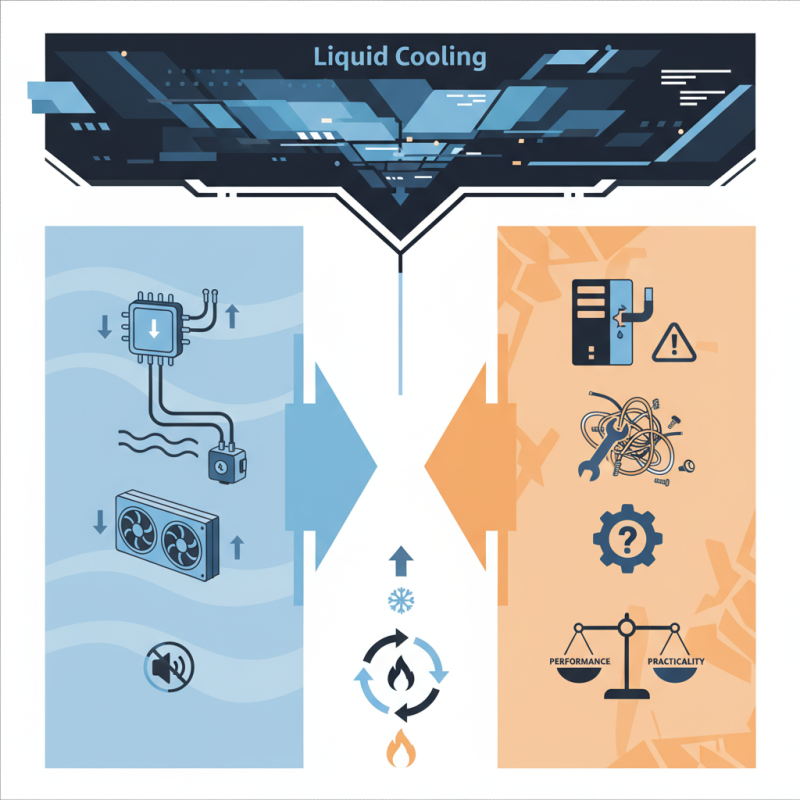
However, building and maintaining a liquid cooler can be challenging. Leaks pose risks, and installation requires precision. Some users may struggle with the complexity involved. Despite these concerns, many enthusiasts prefer liquid coolers for their performance benefits. Balancing efficiency and practicality is key for users exploring liquid cooling solutions.
What is a Liquid Cooler? An Overview of Its Definition and Purpose
Liquid coolers are an increasingly popular solution for managing heat in various applications, especially in high-performance computers and servers. Unlike traditional air cooling methods, which rely on fans, liquid coolers use a liquid coolant to transfer heat away from critical components. This process can significantly reduce temperatures, improving overall system performance and longevity. Reports indicate that systems equipped with liquid coolers can operate at temperatures up to 30% cooler than their air-cooled counterparts, making them suitable for intense workloads.
The essential purpose of a liquid cooler is to offer efficient thermal management. Effective heat dissipation is crucial in maintaining the stability of modern CPUs and GPUs. As technology advances, components produce more heat. According to industry studies, nearly 65% of gamers and professionals report overheating as a primary concern. Liquid coolers address this by distributing the thermal load more evenly. The liquid absorbs heat at the source, moves it away, and then releases it through a radiator, often resulting in quieter operation.
While liquid coolers deliver superior performance, they aren't without their challenges. They require careful installation and maintenance to avoid leaks or air bubbles. Ensuring compatibility with various components can also be tricky. It's essential for users to consider these factors. Regular inspections can prevent potential disasters. Some users may find the initial setup daunting or time-consuming. Nonetheless, the benefits of liquid cooling often outweigh the challenges for those seeking enhanced performance.
Key Components of a Liquid Cooler and Their Functions Explained
Liquid cooling systems are essential for effective thermal management in high-performance computers. The main components include a water block, pump, radiator, and reservoir. Each plays a critical role in maintaining optimal temperatures to ensure system stability.
The water block sits on the CPU or GPU. It absorbs heat directly and transfers it to the coolant. This coolant flows through a series of tubes to the pump, which circulates the liquid through the system. The radiator then dissipates heat into the air. Fans attached to the radiator boost this cooling effect, ensuring temperatures remain low even during intense tasks.
The reservoir holds excess coolant, allowing for easier system maintenance. While this setup is efficient, it requires careful planning. An improperly installed cooler can lead to leaks. Regular checks are also necessary to maintain performance. Users must be vigilant, as neglect could result in overheating. This balance of efficiency and potential risk makes liquid cooling a fascinating subject for enthusiasts.
What is a Liquid Cooler and How Does it Work?
| Component |
Function |
| Radiator |
Dissipates heat from the coolant to the air |
| Pump |
Circulates coolant through the cooling loop |
| Water Block |
Transfers heat from the CPU/GPU to the coolant |
| Coolant |
Absorbs and transports heat away from components |
| Fans |
Enhance airflow over the radiator for better cooling |
| Reservoir |
Holds excess coolant and allows for air removal |
How Liquid Coolers Operate: The Science Behind Thermal Management
Liquid coolers are essential for effective thermal management in electronic devices. They operate by circulating a coolant through a closed-loop system. This coolant absorbs heat generated by the components, ensuring optimal performance. As it flows, the coolant transfers heat away, keeping temperatures in check.
In a typical liquid cooling system, the coolant enters a pump that circulates it to a radiator. The radiator dissipates heat into the environment. Fans mounted on the radiator help enhance airflow. This design can offer better cooling than traditional air coolers. However, it can also introduce complexity to the setup process.
A common challenge is the potential for leaks. Even a small leak can cause significant issues. Users must regularly check their systems for signs of moisture. Additionally, the need for occasional maintenance can be a drawback. Balancing efficiency with upkeep is vital. Liquid cooling offers advantages but also requires careful consideration.
Benefits of Using Liquid Cooling Systems in Modern Computing Environments
Liquid cooling systems offer numerous advantages in contemporary computing environments. They efficiently dissipate heat from high-performance components. Unlike traditional air cooling, liquid systems can target hot spots directly. This results in lower temperatures and improved overall performance. Computers running demanding applications benefit significantly.
Lower temperatures can extend the lifespan of expensive components.
Moreover, liquid cooling is often quieter than air cooling. Fans can produce noise that detracts from the user experience. Liquid coolers operate with fewer moving parts and can be quieter. This makes them ideal for environments where sound matters, like studios or homes.
However, they can be more complex to install. Improper setups may cause leaks or performance issues. Users must ensure proper maintenance to avoid potential problems.
A downside of liquid cooling is the potential for higher costs. Initial investment may be greater than for air coolers. Nonetheless,
the benefits often outweigh these drawbacks. Users need to weigh options carefully. Performance, noise levels, and aesthetics play a role in decision-making. Liquid cooling is not for everyone, but
its advantages can be significant in the right setup.
Comparative Analysis: Liquid Cooling vs. Air Cooling Efficiency Metrics
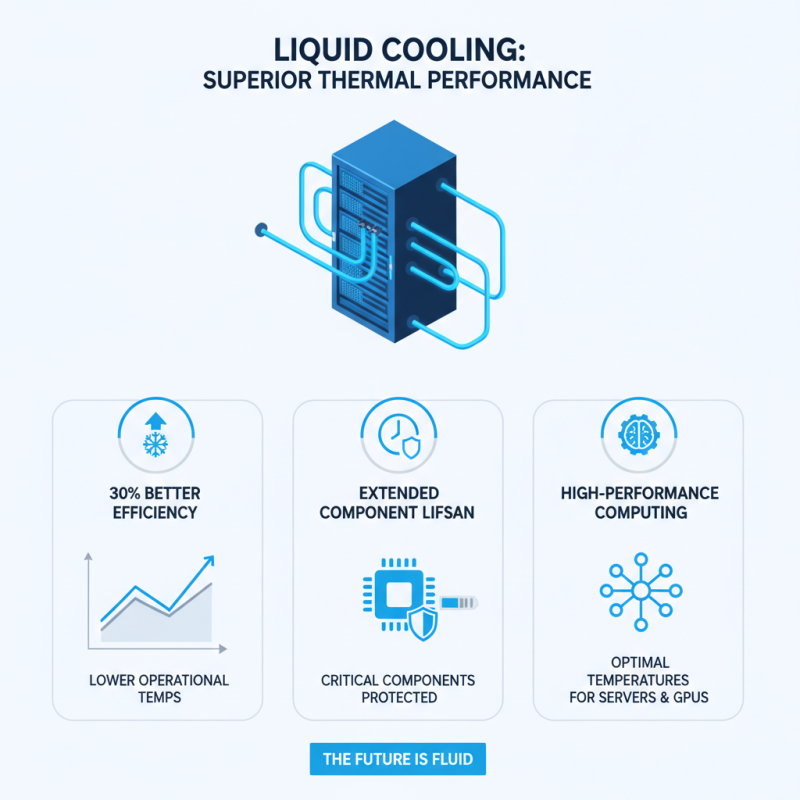
Liquid cooling systems have gained traction due to their superior efficiency when compared to traditional air cooling methods. A recent industry report indicates that liquid cooling can provide up to 30% better thermal performance. This translates to lower operational temperatures, extending the lifespan of critical components. For high-performance computing, maintaining optimal temperatures is essential.
Air cooling, while inexpensive and easy to install, often struggles in high-demand environments. Studies show that air cooling solutions can barely manage up to 50 degrees Celsius under heavy load. In contrast, liquid coolers can function effectively at temperatures beyond 70 degrees Celsius. This difference makes liquid cooling a more viable choice for gaming rigs and data centers. However, implementation costs can be higher.
An interesting observation is that though liquid cooling is efficient, it requires careful planning to avoid potential leaks. One misstep can lead to damage, negating the benefits. Ultimately, both systems have their merits and drawbacks, and selecting the right option should align with specific needs and application demands.




 Mr. Perry Wu International Sales Director