What is a Flexible Heat Pipe and How Does it Work?
In the realm of thermal management, the emergence of the Flexible Heat Pipe has captured significant attention. This innovative technology addresses the increasing demand for efficient heat transfer solutions across various industries. A report by the International Heat Pipe Association highlights that the global heat pipe market is expected to grow at a CAGR of 8.5% from 2021 to 2028. Such statistics underline the importance of flexible designs in applications like electronics cooling and renewable energy.
The design flexibility offers numerous advantages. It allows for integration in compact and complex systems, which is crucial in the aerospace and automotive sectors. However, the manufacturing process requires precision. Variability in material selection can impact performance. Despite its strengths, engineers must carefully consider installation angles and thermal loads.
The robustness of the Flexible Heat Pipe is notable, yet it is not infallible. Like any technology, it comes with challenges. Designing for varying operational conditions requires expertise and foresight. As industries evolve, the importance of reliability in thermal solutions will only grow. Balancing innovation with practical application remains key to harnessing the full potential of this technology.
What is a Flexible Heat Pipe?
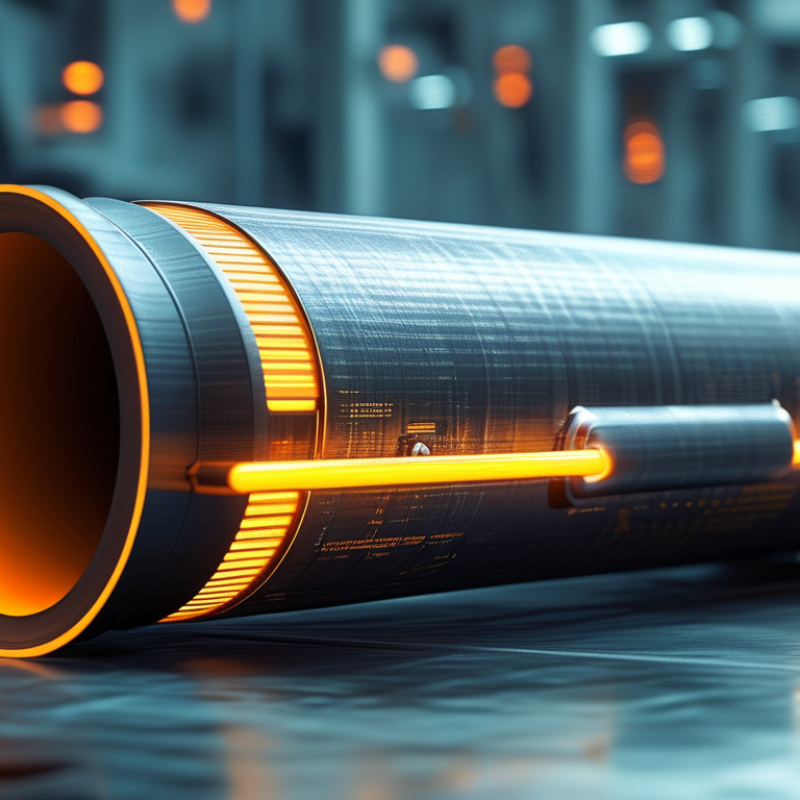
Flexible heat pipes are innovative thermal management devices designed to transfer heat efficiently between two points. Unlike traditional rigid pipes, these can bend and adapt to various shapes. This flexibility allows them to fit into tight spaces, making them ideal for modern applications, such as electronics or renewable energy systems. They utilize the principles of phase change to transport heat. A working fluid inside the pipe evaporates and condenses, moving heat rapidly along the structure.
When considering flexible heat pipes, it's important to note their limits. They can be affected by the operating environment. For example, excessive bending may hinder performance. It is crucial to follow the manufacturer's guidelines for installation and orientation.
Tip: Always consider the temperature range and materials used for the heat pipe. A mismatch can lead to reduced efficiency. Regular checks can prevent unforeseen problems. Understanding its design will help you maximize performance.
Components of a Flexible Heat Pipe
Flexible heat pipes are innovative thermal management devices employed in various industries.
Their design consists of a few essential components that work together to transfer heat efficiently. The main components include the
container, wick structure,
working fluid, and vacuum.
The container is typically made from materials like copper or aluminum.
This choice provides excellent thermal conductivity. The wick structure, often composed of capillary materials, creates a network that helps in fluid movement.
The working fluid, which could be water, ammonia, or other specialized fluids, plays a vital role in heat absorption and dissipation.
Finally, a vacuum environment inside the pipe minimizes heat loss.
According to a report by the International Journal of Heat and Mass Transfer, effective design can enhance thermal performance by over 30%.
Tips: When selecting a flexible heat pipe, consider the working fluid based on the application temperature range.
Additionally, assess the wick structure to ensure optimal thermal performance.
The assembly and maintenance of flexible heat pipes require attention to detail.
Improper installation may lead to inefficiencies or operational failures.
It's crucial to monitor conditions that could compromise the vacuum seal, ensuring the reliability of thermal management systems.
Advanced simulations can help predict performance but may not always capture real-world challenges.
Mechanism of Heat Transfer in Flexible Heat Pipes
Flexible heat pipes are essential for efficient thermal management in various applications. They operate on a simple principle. A working fluid circulates within a sealed structure, absorbing heat from a source and transferring it to a cooler area. This process occurs through evaporation and condensation, which are critical for effective heat transfer.
The mechanism of heat transfer in flexible heat pipes involves several stages. When heat is applied, the fluid inside vaporizes, creating pressure. This vapor moves towards cooler sections, where it condenses, releasing heat. The condensed fluid then returns to the hot zone due to capillary action. This continuous cycle allows for efficient thermal regulation.
However, designing these systems can present challenges. The choice of working fluid and the pipe material significantly impact performance. Sometimes, the heat transfer may not be uniform, leading to hotspots. Understanding these nuances is vital. Engineers must consider how each component affects overall efficiency. This complexity can lead to unforeseen issues during operation.
What is a Flexible Heat Pipe and How Does it Work? - Mechanism of Heat Transfer in Flexible Heat Pipes
| Dimension |
Measurement |
Material |
Max Operating Temp (°C) |
Typical Applications |
| Length |
300 mm |
Copper |
150 |
Electronic Cooling |
| Diameter |
6 mm |
Aluminum |
120 |
Space Applications |
| Flexibility |
Up to 90° bend |
Stainless Steel |
100 |
Automotive Cooling |
| Weight |
200 g |
Titanium |
180 |
High-Performance Computing |
Applications of Flexible Heat Pipes in Various Industries
Flexible heat pipes are becoming essential in many industries. Their unique design allows for efficient thermal management. They are lightweight and can be shaped to fit various applications, making them ideal for tight spaces.
In the automotive industry, flexible heat pipes are used for cooling components. They help manage heat in electric vehicles, improving battery life and performance. In electronics, they are crucial for dissipating heat from critical components. This enhances the reliability and longevity of devices.
Tips: When choosing a heat pipe, consider its shape and material. Each application may require specific features to optimize performance. Similarly, regular maintenance is key. Inspecting heat pipes can prevent failures in critical systems.
Advantages and Limitations of Using Flexible Heat Pipes
Flexible heat pipes offer unique advantages, particularly in applications requiring high thermal efficiency and limited space. Their adaptability allows them to be easily integrated into diverse designs. According to recent industry reports, these heat pipes can achieve thermal conductivity levels exceeding 1000 W/mK, significantly enhancing heat transfer in compact systems. This capability is crucial for sectors like electronics and renewable energy, where effective heat management is essential for performance and longevity.
However, there are limitations associated with flexible heat pipes. While they excel in thermal efficiency, they often suffer from reduced durability under extreme conditions. For instance, the bending radius may affect their operational lifespan. Some studies indicate that excessive bending can lead to performance degradation, reducing thermal conductivity by up to 20%. Additionally, the manufacturing process can be complex and expensive, which may deter widespread adoption in cost-sensitive industries. These factors must be carefully considered when designing systems employing flexible heat pipes.






 Mr. Perry Wu International Sales Director