2026 How to Use Heat Pipe Technology for Efficient Thermal Management?
Heat pipe technology is transforming thermal management across various industries. Experts like Dr. Emily Chen highlight its importance, stating, "Heat pipes efficiently transfer thermal energy while minimizing thermal resistance." This innovation is pivotal in electronics, aerospace, and renewable energy sectors.
The efficiency of heat pipes lies in their unique design. They utilize phase change materials to absorb and dissipate heat rapidly. This allows for compact and lightweight solutions, essential for modern applications. However, many industries still face challenges in integrating heat pipes effectively.
Despite their potential, some engineers remain skeptical. They worry about reliability and performance in variable conditions. Ongoing research is crucial for addressing these concerns. As we adopt heat pipe technology, understanding its limitations becomes vital. The future of thermal management may hinge on overcoming these barriers while leveraging heat pipe benefits.

Heat Pipe Technology: An Overview of Principles and Applications
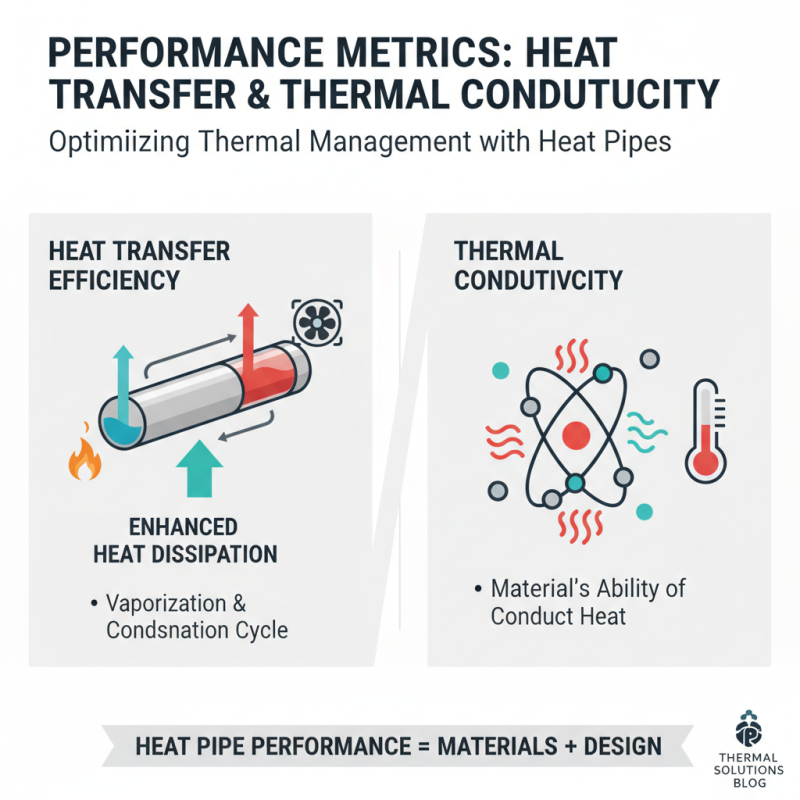
Heat pipe technology operates on the principle of phase change to enhance thermal management. By utilizing a sealed container filled with a working fluid, heat pipes efficiently transfer heat away from hot surfaces. The fluid evaporates at higher temperatures, moves to cooler areas, and then condenses back into liquid. This process provides rapid heat dissipation, essential in electronics and industrial applications. According to a 2023 report from the International Society for Heat Transfer, heat pipes can offer thermal conductivities up to 100 times greater than solid metals.
Heat pipes find extensive use across various industries. In electronics, devices like CPUs benefit significantly from heat pipes. They can reduce junction temperatures by 10 to 15 degrees Celsius, enhancing performance and lifespan. The automotive sector leverages heat pipes for battery thermal management, improving efficiency and safety. Moreover, recent experiments point out that optimizing the working fluid can further enhance the performance of heat pipes. However, the selection of materials and design can lead to limitations, making ongoing research vital. Over time, analysis reveals that not all heat pipes maintain efficiency under extreme conditions, suggesting room for improvement.
2026 Heat Pipe Technology Efficiency in Various Applications
Historical Development and Evolution of Heat Pipe Technology
Heat pipe technology has evolved significantly since its inception in the 1960s. Initially developed for space missions, this technology efficiently transfers heat using phase change principles. According to a report by the International Heat Pipe Association, heat pipes can achieve thermal conductivities up to 100 times greater than copper. This remarkable efficiency makes heat pipes crucial in various sectors today, including electronics, aerospace, and renewable energy.
Over decades, heat pipes have advanced in design and application. The introduction of micro and miniature heat pipes has expanded their use in compact devices. Engineers are continuously innovating, focusing on improving materials and performance under different environmental conditions. Yet, challenges often arise, such as maintaining optimal performance during temperature fluctuations. Continuous research is needed to refine these technologies further.
**Tip:** When working with heat pipes, ensure proper alignment and orientation. This can significantly enhance performance and reliability.
**Tip:** Consider using dedicated heat sinks alongside heat pipes. This combination can improve thermal management in demanding applications.
Despite the successes, performance limitations at extreme temperatures still require attention. Future developments must address these issues to fully harness the potential of heat pipe technology in diverse applications.
Key Materials and Manufacturing Techniques for Efficient Heat Pipes
Heat pipe technology has gained attention for its efficiency in thermal management. Key materials play a crucial role in enhancing heat pipe performance. Copper and aluminum are common choices due to their excellent thermal conductivity. However, newer materials like carbon composites offer potential benefits as well. Each material has varying impacts on weight, cost, and thermal efficiency, making it essential to choose wisely based on specific applications.
Manufacturing techniques significantly influence the effectiveness of heat pipes. Sintering, for example, creates a robust bond between the wick structure and the pipe walls. This process must be carefully controlled to prevent defects. Laser welding also emerges as a viable technique for ensuring tight seals without material degradation. Improper techniques can lead to inefficiencies, reducing overall thermal performance. Addressing these challenges requires ongoing research and development, as the industry aims for even higher standards.
2026 How to Use Heat Pipe Technology for Efficient Thermal Management?
| Heat Pipe Type |
Working Fluid |
Operating Temperature Range (°C) |
Material |
Manufacturing Technique |
| Copper Heat Pipe |
Water |
-40 to 150 |
Copper |
Soldering |
| Aluminum Heat Pipe |
Methanol |
-50 to 150 |
Aluminum |
Extrusion |
| Glass Heat Pipe |
Ammonia |
-30 to 100 |
Borosilicate Glass |
Glass Blowing |
| Thin Film Heat Pipe |
Water |
-20 to 80 |
Stainless Steel |
Laser Welding |
| High-Performance Heat Pipe |
Sodium |
-200 to 700 |
Titanium |
Vacuum Sealing |
Current Trends and Future Directions in Heat Pipe Technology for 2026
Heat pipe technology has emerged as a pivotal solution for thermal management across various industries. In 2026, we see an increased focus on efficiency and sustainability. Many sectors are adopting advanced heat pipe designs that optimize thermal transfer. They are beneficial in electronics, aerospace, and renewable energy systems. Enhanced materials are being used to increase efficiency. Improved manufacturing techniques are also making heat pipes more accessible. Engineers are continuously exploring innovative applications.
Current trends indicate a growing interest in hybrid systems. These systems combine heat pipes with other cooling technologies for better performance. There are new challenges, such as managing thermal performance in extreme conditions. Researchers are experimenting with nano-fluids to enhance heat transfer rates. This approach could lead to more compact designs. However, not all innovations are straightforward. Some solutions may introduce complexities in manufacturing and maintenance.
Looking ahead, the future of heat pipe technology is promising yet requires careful consideration. Developing guidelines for materials and applications is crucial. The industry must also address the environmental impact of production processes. Balancing performance with sustainability will be essential. Collaboration among professionals can drive innovation. Successful adaptation of heat pipes in various fields will depend on shared knowledge and practical insights.






 Mr. Perry Wu International Sales Director