Why is Heat Sink Thermal Resistance Important for Electronics?
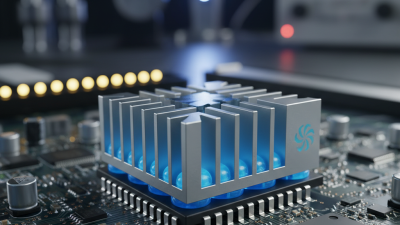
Heat Sink Thermal Resistance plays a crucial role in the performance and longevity of electronic devices. As electronics become more compact, effective thermal management becomes essential. The ability of a heat sink to dissipate heat directly influences the reliability of the components it supports.
High thermal resistance can lead to overheating, causing failure or reduced efficiency. Properly designed heat sinks ensure that devices operate within safe temperature ranges. This is vital, especially in high-performance applications like gaming and data centers.
Understanding Heat Sink Thermal Resistance helps engineers make informed decisions about materials and designs. It can be challenging to strike the right balance between thermal resistance and cost. Therefore, ongoing research and testing are critical in this field. By focusing on better solutions, we can enhance device durability and performance.
The Concept of Thermal Resistance in Heat Sinks
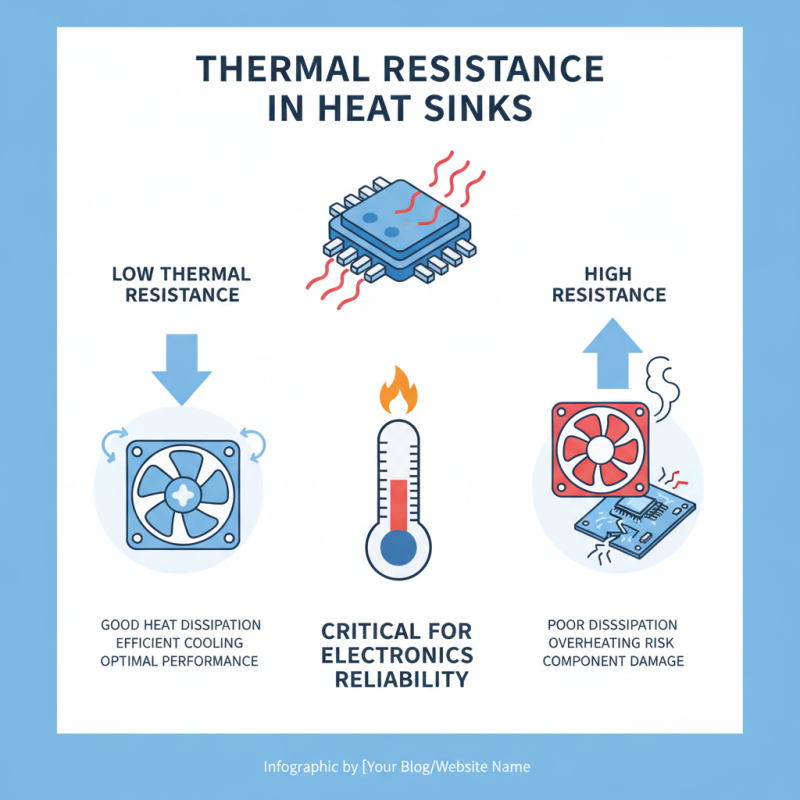
Thermal resistance is a critical concept in understanding heat sinks. It refers to the ability of a heat sink to transfer heat away from electronic components. High thermal resistance indicates poor heat dissipation, which can lead to overheating. This can negatively affect performance and potentially damage the components.
A heat sink's design influences its thermal resistance. Materials and surface area play key roles. For instance, larger surface areas facilitate better heat transfer. The choice of materials affects thermal conductivity. Low thermal resistance is essential for high-performance electronics, ensuring reliability and longevity.
Tips: Ensure your heat sinks have adequate airflow. Monitor the operating temperature of components regularly. Consider using thermal paste for better contact.
Understanding thermal resistance allows engineers to select the right heat sink. A poor choice can lead to overheating. Balancing size, material, and design is essential. Reflecting on past thermal issues can guide better decisions in future projects. Regular analysis is vital for continuous improvement in thermal management strategies.
The Role of Heat Sinks in Electronics Cooling
Heat sinks play a crucial role in the cooling of electronic devices.
These components dissipate excess heat produced during operation, preventing overheating and potential damage.
According to the Electronics Cooling Industry Report, around
35% of electronics failures are attributed to thermal issues.
This highlights the importance of effective thermal management, as failure to manage heat can drastically reduce the lifespan of components.
The design and material of heat sinks directly influence cooling efficiency. Factors such as thermal resistance
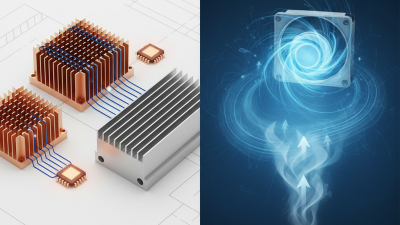
and surface area are critical. For instance, aluminum is commonly used due to its excellent thermal conductivity
and lightweight nature. However, in some applications, copper, despite being more expensive, is employed for its
superior thermal performance. The balance between cost, weight, and thermal efficiency must be evaluated carefully.
In many cases, manufacturers overlook the thermal resistance of heat sinks during design stages. This can lead to inadequate cooling performance.
A study revealed that improper heat dissipation could result in temperature increases of
20°C in critical components. Such data shows the need for thorough thermal analysis
early in the design process. Effective thermal management not only enhances reliability but also boosts overall performance and user satisfaction.
Factors Affecting Heat Sink Thermal Resistance
Heat sink thermal resistance plays a critical role in the efficiency and lifespan of electronics. Several factors influence this thermal resistance, which directly affects the heat dissipation capabilities of the heat sink. Key elements include thermal conductivity, surface area, and design geometry.
Thermal conductivity, usually measured in watts per meter-kelvin (W/m·K), quantifies how well a material conducts heat. Materials with higher thermal conductivity lower thermal resistance. For instance, copper has a conductivity of approximately 400 W/m·K, while aluminum is around 235 W/m·K. Choosing the right material can significantly impact the overall performance of heat sinks.
Surface area is another crucial factor. A larger surface area provides more opportunity for heat transfer, reducing thermal resistance. According to thermal management studies, increasing a heat sink’s surface area by just 10% can lead to up to a 5% reduction in thermal resistance. Design geometry also matters. Fins or ridges can enhance airflow, promoting better heat dissipation. However, overly complex designs may introduce manufacturing challenges and higher costs, which require careful reflection before implementation.
Factors Affecting Heat Sink Thermal Resistance
This chart illustrates various factors affecting the thermal resistance of heat sinks in electronics. Lower thermal resistance can significantly enhance the efficiency of heat dissipation, leading to better performance and longevity of electronic components.
Measurement and Calculation of Thermal Resistance
Thermal resistance is crucial in evaluating a heat sink's effectiveness. It's defined as the ratio of temperature rise to power dissipation. A lower thermal resistance indicates better heat dissipation. For electronics, this is essential to maintain performance and longevity. According to industry reports, thermal management failures cause about 30% of electronic device malfunctions. This highlights the importance of understanding thermal resistance.
Measurement of thermal resistance can be tricky. It's often calculated using the formula Rθ = (Tjunction - Tambient) / P. Here, Tjunction is the temperature of the component, Tambient is the ambient temperature, and P is the power dissipated. Accurate measurement requires precise tools. Infrared thermometers and thermocouples are common in industry settings. Yet, many engineers still rely on estimates. This can lead to unreliable results and potential overheating.
Understanding these calculations allows engineers to design better systems. For example, a heat sink's thermal resistance should ideally be below 1°C/W for optimal performance. Many designs fail to meet this benchmark. Engineers must regularly revisit their calculations and consider alternative materials or designs. Investing in thermal simulation software could offer insights into better heat sink designs. This proactive approach ensures that thermal management remains a priority.
Impact of Thermal Resistance on Device Performance and Longevity
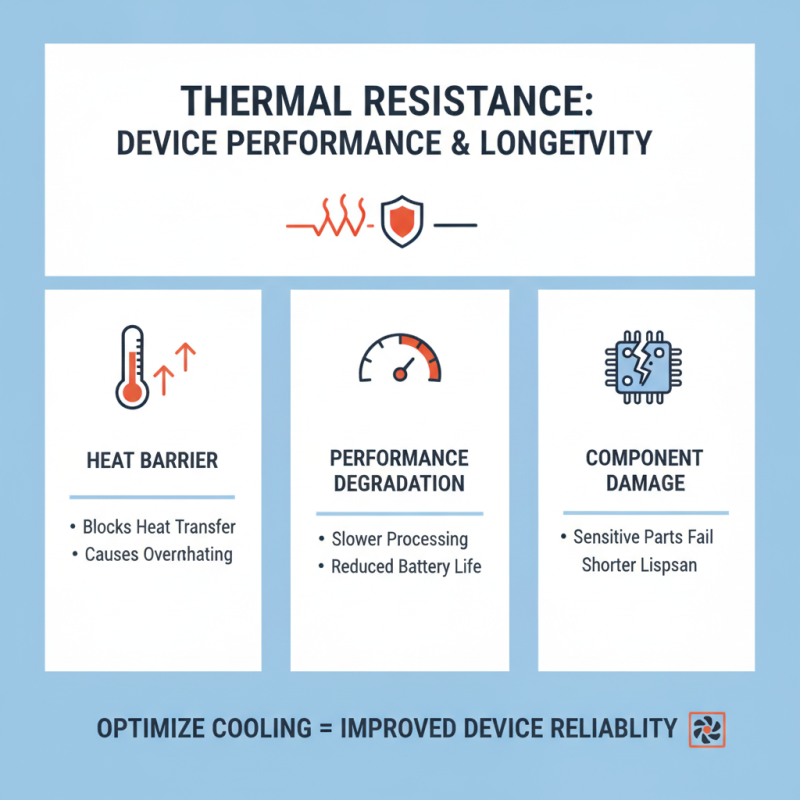
Thermal resistance plays a critical role in the performance of electronic devices. It acts as a barrier to heat transfer, which can lead to overheating. When devices operate at high temperatures, their performance can degrade. This degradation may cause slower processing speeds or reduced battery life. Additionally, high temperatures can damage sensitive components, leading to potential failures.
The impact of thermal resistance on longevity is profound. Devices that maintain lower operational temperatures tend to last longer. Heat sinks are designed to manage excess heat effectively. However, if their thermal resistance is too high, heat dissipation becomes inefficient. As a result, components are under constant thermal stress. This stress can lead to failure modes that might not be immediately apparent.
Moreover, there is an ongoing challenge in balancing thermal management and space constraints. A more effective heat sink design might not always fit within the enforced size limits of the device. Testing different materials and configurations must be part of the design process. Understanding these variables is crucial for engineers. Each decision impacts how well a device will perform over time.



 Mr. Perry Wu International Sales Director