Top Heatsink Fan Options for Efficient Cooling Solutions?
Effective cooling is crucial in today's high-performance computing environment. The demand for robust cooling solutions drives innovation in the heatsink fan market. According to a 2023 report by Research and Markets, the global heatsink market is projected to reach $8.76 billion by 2027. This growth underscores the importance of selecting quality heatsink fans to prevent thermal throttling and improve system reliability.
Heatsink fans play a pivotal role in dissipating heat from CPUs and GPUs. Their efficiency directly impacts system performance and longevity. Studies show that a well-designed heatsink fan can reduce temperatures by up to 30%. However, not all fans meet these expectations. Some models may produce excessive noise or have inadequate airflow. Users must carefully consider these factors when making a choice.
Choosing the right heatsink fan is not just about performance. It involves weighing noise levels, size, and compatibility with existing systems. Industry experts recommend considering fans with PWM control for optimal efficiency. Yet, not every option on the market embraces these advancements, leaving room for improvement. An informed selection can lead to better cooling solutions and enhanced user experiences in demanding computational tasks.

Overview of Heatsink Fan Functionality and Importance
Heatsink fans play a crucial role in thermal management for various electronic devices. Their primary function is to dissipate heat generated by components like CPUs and GPUs. According to a recent report by the International Thermal Management Society, effective cooling can enhance device lifespan by up to 50%. This underscores the importance of selecting the right heatsink fan for optimal performance.
The design of heatsink fans impacts airflow and cooling efficiency. Larger fans often provide better cooling due to their ability to move more air at lower speeds. However, they can be bulkier, which poses a challenge for compact systems. In contrast, smaller fans run faster but may generate more noise. Research indicates that an optimal balance can improve cooling performance by up to 30%. This complexity requires careful consideration of each system's unique needs.
Selecting a heatsink fan involves more than just size or noise level. Factors like thermal resistance and airflow rates must be evaluated. Sometimes, even small fans struggle in environments where heat dissipation is critical. This highlights a need for ongoing innovation in heatsink design. Engineers should remain open to testing new materials and designs to find what works best for specific applications.
Types of Heatsink Fans for Various Cooling Needs
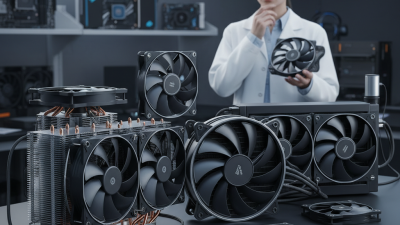
When choosing heatsink fans, understanding the types available is crucial. There are several designs to consider, each tailored for different cooling needs. For example, radial fans provide excellent airflow in compact spaces. They deliver airflow directly over the heatsink, optimizing heat dissipation. This design is popular in smaller devices where size matters.
Axial fans are another common choice. They operate by pushing air in a straight line, making them effective in larger setups. They can typically move more air, but they require more space. It’s essential to match the fan size to the heatsink. Inadequate airflow can lead to overheating issues, impacting performance. Sometimes, people overlook this detail, leading to inefficient cooling solutions.
Moreover, noise levels also vary across fan types. Larger fans can spin more slowly, reducing noise while still maintaining airflow. Conversely, smaller fans often run at higher speeds, generating more noise. These trade-offs must be considered carefully. A powerful fan isn’t always the best choice. Balancing cooling efficiency with operational noise is key. This requires a thoughtful approach to ensure your system runs optimally without being overly loud.
Top Heatsink Fan Options for Efficient Cooling Solutions
This chart displays the performance efficiency of various types of heatsink fans based on airflow (CFM) and static pressure (mmH2O). These metrics are crucial for assessing the suitability of a heatsink fan for different cooling needs.
Key Features to Consider When Choosing Heatsink Fans
When selecting heatsink fans, several key factors are crucial. Noise levels should be a priority. Many users prefer quieter options, especially in home setups. Look for fans that balance airflow and noise. Static pressure is also significant for performance. A fan with good static pressure will push air effectively through heatsinks. This ensures proper cooling, especially in tight spaces.
Compatibility is another essential consideration. Ensure the fan size matches your heatsink dimensions. A poor fit can lead to inefficient cooling and increased temperatures. Pay attention to the RPM range as well. Higher RPM usually translates to better airflow but can increase noise. Reviews and user feedback can offer insights into real-world performance.
Lastly, consider durability. The lifespan of a heatsink fan matters. Look for options with high-quality bearings. Fans with fluid dynamic bearings often last longer. Reflect on your needs and environment. Not every option will suit all situations. Take time to evaluate your requirements before making a choice.
Top Heatsink Fan Options for Efficient Cooling Solutions
| Fan Type |
Airflow (CFM) |
Noise Level (dB) |
Max RPM |
Dimensions (mm) |
Weight (g) |
| 120mm PWM Fan |
75 CFM |
22 dB |
2000 RPM |
120 x 120 x 25 |
150 |
| 140mm High Static Pressure Fan |
90 CFM |
25 dB |
1800 RPM |
140 x 140 x 25 |
175 |
| 80mm Compact Fan |
35 CFM |
28 dB |
3000 RPM |
80 x 80 x 25 |
80 |
| 92mm Silent Fan |
50 CFM |
18 dB |
2200 RPM |
92 x 92 x 25 |
100 |
Top Brands and Models in the Heatsink Fan Market
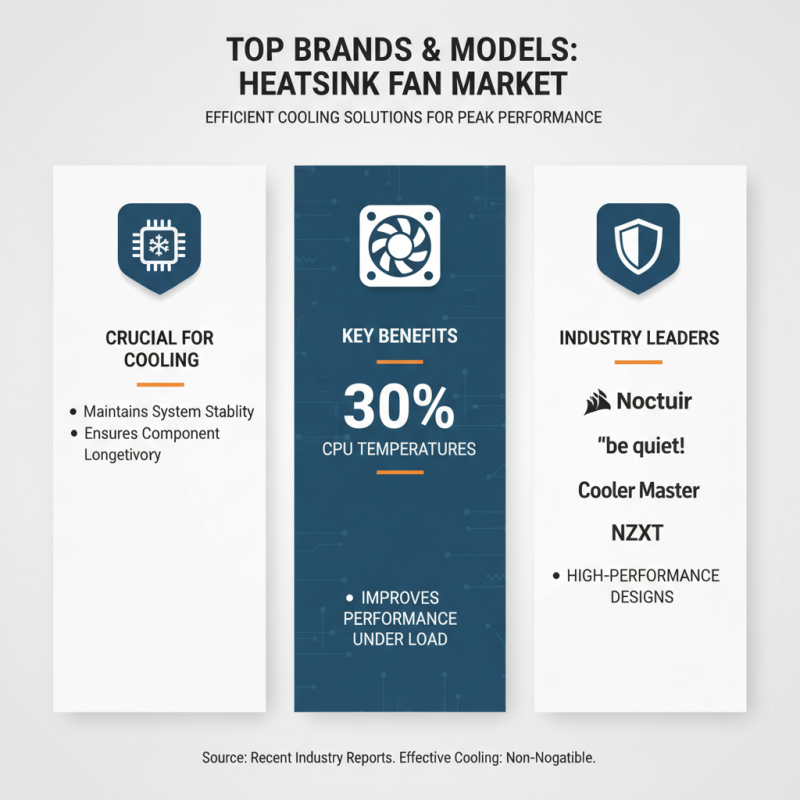
When considering efficient cooling solutions, selecting the right heatsink fan is crucial. The heatsink fan market features various top brands that excel in thermal management. Recent industry reports indicate that high-performance fans can reduce CPU temperatures by up to 30%. This is critical for maintaining system stability and longevity. As workloads increase, effective cooling becomes non-negotiable.
Popular models often vary in size, RPM, and noise levels. Some fans operate quietly at just 20 dBA while moving substantial air, which enhances overall performance without disturbing the workspace. Tips for choosing the right fan include assessing your specific cooling needs and evaluating noise tolerance. A more powerful fan may draw more attention with noise but can significantly improve cooling efficiency.
It's also essential to consider the mounting options of the heatsink. Incompatibility issues can lead to performance drops. The fan's static pressure rating determines its ability to push air through dense configurations. Thus, evaluating these specifications carefully is vital. Continuous research and user feedback can lead to choices that blend performance and reliability seamlessly. Always reconsider if your choice meets your evolving needs in an ever-changing technological landscape.
Guidelines for Installation and Maintenance of Heatsink Fans
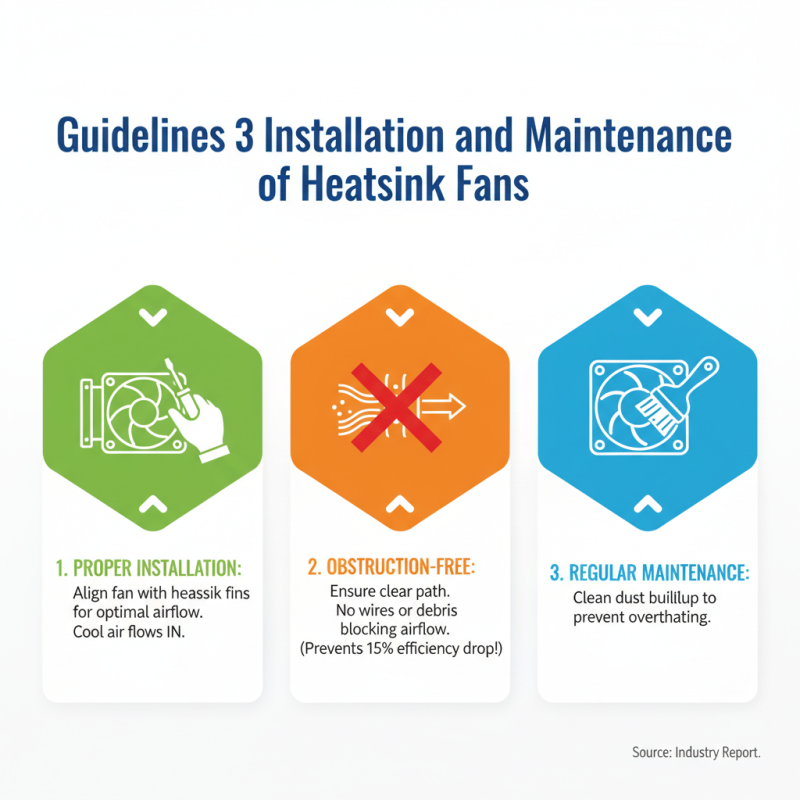
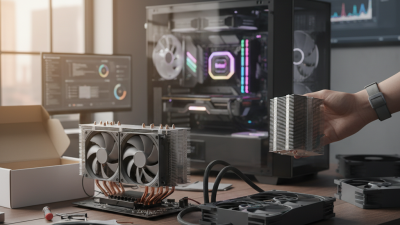
When it comes to heatsink fan installation, proper technique is essential. A recent industry report highlighted that improper installation can lead to a staggering 15% drop in cooling efficiency. Be sure to position the fan in alignment with the heatsink for optimal airflow. Cool air should flow directly into the fins. Additionally, ensure that nothing obstructs the path. Dust buildup can also impede performance, leading to overheating.
Regular maintenance is just as crucial. Cleaning the heatsink and fan at least once every three months can prevent thermal throttling. Reports indicate that up to 30% of cooling performance can be lost due to dust. Use compressed air to gently remove debris without damaging components. It’s smart to check for wear on fans. A worn-out fan can introduce noise and reduced airflow, impacting overall system performance.
Remember, monitoring temperatures can guide maintenance. Software tools provide real-time temperature data. If temperatures exceed recommended limits, it’s time to inspect your setup. Reflect on how this simple, yet vital aspect impacts your overall system longevity and efficiency.




 Mr. Perry Wu International Sales Director